
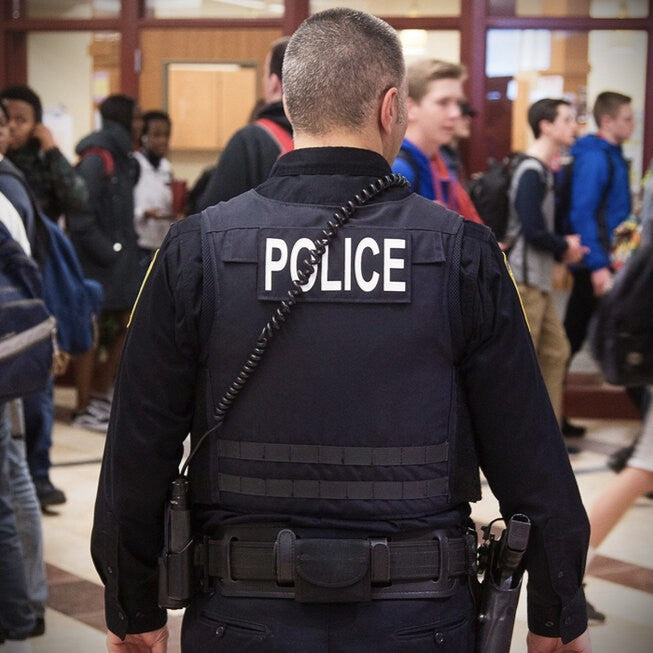
Lack of Policy Fails Elementary-Aged Children Arrested in U.S. Schools
David Walton
Jan 02, 2026
The arrest of elementary-aged children in American schools is not a law enforcement problem, it is a policy failure. When young children are handcuffed, zip-tied, or removed from classrooms by police officers, the fault lies primarily with elected officials, policymakers, and school systems that have failed to establish clear, age-appropriate protections for students in grades K–5.
For more than a decade, lawmakers have acknowledged the problem, yet meaningful reform remains elusive. In May 2023, a bill introduced in the U.S. Senate sought to ban the use of restraints such as handcuffs on children for school disciplinary purposes. While important, the proposal stopped short of preventing arrests altogether. Earlier, in 2022, the Counseling Not Criminalization in Schools Act—designed to reduce student arrests and shift schools toward supportive interventions—failed to pass. The result is a persistent gap in federal guidance that leaves young children exposed to punitive responses meant for adults.
Schools Are Turning to Police by Default
Across the country, school administrators and staff, often overwhelmed and under-resourced, are increasingly relying on campus law enforcement to address behavioral issues that were once handled internally. This shift is not driven by malice, but by necessity. According to U.S. Department of Education data, 40% of public schools report that it is difficult or very difficult to fill mental health professional roles, such as counselors, psychologists, and social workers.
When schools lack trained professionals equipped to respond to behavioral challenges, law enforcement becomes the default intervention, even when the behavior stems from emotional distress, developmental differences, or unmet support needs. This is especially troubling at the elementary level, where children are still developing emotional regulation and impulse control.
Disproportionate Impact on Children With Disabilities
The consequences of this approach fall hardest on vulnerable students. Data from the U.S. Department of Education shows that elementary-aged children with documented disabilities, including ADHD and autism, are four times more likely to be arrested than their peers without disabilities. These are not children engaged in criminal conduct, but students whose behaviors often reflect unmet educational or medical needs.
Rather than receiving support, these children are too often introduced to the criminal justice system at an age when they are barely able to understand what is happening to them.
The Data Tells a Disturbing Story
While elementary school arrests have declined over time, they have not disappeared:
2013–2014: 1,087 arrests
2015–2016: 805 arrests
2017–2018: 715 arrests
2020–2021: 125 arrests (a sharp decline largely attributed to COVID-19 school closures)
The states with the highest number of elementary school arrests include Texas, Pennsylvania, Florida, and Illinois. These figures demonstrate that the practice is neither rare nor isolated.
Nearly all children arrested at this age are zip-tied, not handcuffed, because their wrists are too small. The image alone should give pause: young children restrained in ways that underscore just how ill-suited criminal justice tools are for elementary school settings.
Law Enforcement Is Being Asked to Fill a Role It Was Never Meant to Play
Importantly, this issue should not be mischaracterized as a failure of individual officers. Law enforcement is increasingly called upon to perform a school disciplinary role for which policing was never intended. In many cases, officers and their supervisors do attempt to assess the totality of the situation, considering factors such as known disabilities, prior incidents, parental notification, or signs of abuse, neglect, or medical distress.
But even the most thoughtful officer is constrained by the absence of clear policy boundaries. When schools summon police and no alternative framework exists, officers are placed in an impossible position, expected to manage childhood behavior through a system built for adults.
A Constitutional Question We Can No Longer Ignore
Beyond policy and practicality lies a deeper constitutional concern. William Lassiter, Deputy Secretary for Juvenile Justice in North Carolina, has questioned whether arresting very young children is constitutional at all.
“The fundamental belief of our constitutional system is that if you’re standing trial, you need to understand what your rights are and how to participate in your defense,” Lassiter told USA TODAY. “There’s just no way that a 6- or 7-year-old can do that.”
If children cannot comprehend their rights, the legitimacy of arresting them collapses under its own logic.
A Call for Clear, Age-Appropriate Policy
The solution is not to vilify law enforcement, but to remove elementary-aged children from the criminal justice pipeline altogether. Policymakers must establish firm protections that prohibit arrests for routine school behavior in grades K–5, expand access to mental health professionals, and clearly define the limited circumstances, if any, under which police involvement is appropriate.
Until lawmakers act, schools will continue to rely on policing as a substitute for care, and children will continue to bear the consequences of adult policy failures. ~
← Older Post Newer Post →